⚽️ How We Build Confident Players
⚽️ How We Build Confident Players
Inside Vision Soccer: Building Smarter, More Confident Players (Article 1)
At Vision Soccer, we believe confident players are intelligent players.
Confidence isn’t something you can simply “teach” through pep talks or praise, it’s something that’s earned through consistent, thoughtful training that gives players ownership of their decisions.
In our previous blog, “To Develop Intelligent Players, We Must End Joystick Coaching”,
we explored how constant sideline instruction takes away players ability to think and decide for themselves. True confidence comes from trusting your own decisions, not just following someone else’s directions.
This first article of our new blog series, 'Inside Vision Soccer: Building Smarter, More Confident Players,' We take a closer look at how we build that confidence through three key elements of our curriculum:
Non-linear games and our four-goal system
The use of shooting zones
A variety of competitive levels within each environment
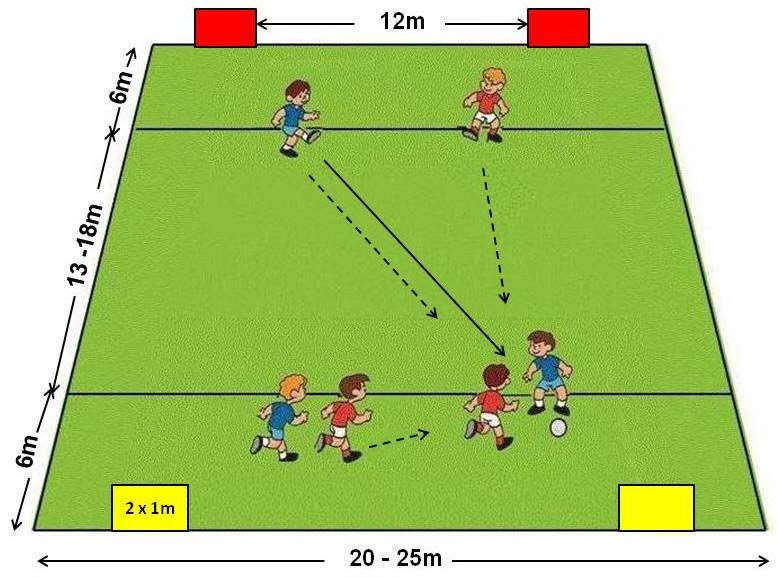
1. Non-Linear Games: The Four-Goal System
One of the most effective ways we build confidence is through what we call non-linear games, small-sided activities that use four goals instead of two.
In a traditional “directional” game, there’s one goal to attack and one to defend. Young players learn to move in straight lines, play predictable passes, and attack only one way. But real soccer isn’t linear, it’s dynamic, chaotic, and constantly changing direction.
By introducing four goals, the game opens up.
Players must:
Scan to find the open goal (building awareness)
Change direction to exploit space (building agility and deception)
Make independent decisions in real time, not receiving instructions
This simple change multiplies the number of developmental moments. This game format produces countless 1v1 and 2v1 situations, and players must learn to find the best solution, as there’s always more than one way to score.
Most importantly, non-linear games reward creativity and problem-solving.
Instead of chasing results, and trying to learn a complex ‘system,’ players chase solutions and
game understanding. And with every decision they make, right or wrong,
they gain confidence in their ability to think for themselves.
“The more decisions a child makes on their own, the faster their soccer intelligence and confidence grows.”
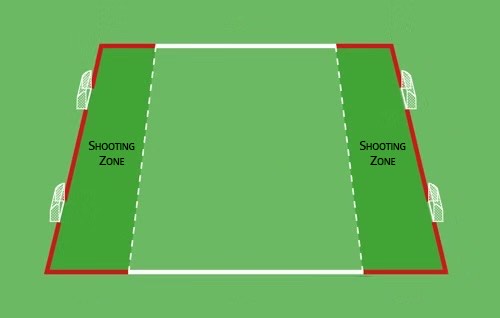
2. Shooting Zones: Teaching Confidence Through Dribbling
The second key element is our use of shooting zones, a 5-8 yard area (end zone) near each goal where players must enter before they’re allowed to score.
At first, this might sound like a restriction. But in development, the right constraints create freedom and confidence.
By requiring players to get into a shooting zone, we encourage them to:
Dribble with intent instead of shooting from distance
Engage defenders 1v1, using turns, fakes, and changes of pace
Build composure near goal, where real scoring chances happen
This approach rewires the way players think about attacking. They learn to take players on, to stay calm in tight spaces, and to finish confidently, all habits that translate directly into real match situations.
And because players get repetition after repetition of these close-control dribbling moments, they not only improve their dribbling technique, they also learn to trust it.
Confidence doesn’t come from scoring once.
It comes from mastering the process that gets you there.
3. The Power of Varied Competition
Finally, confidence thrives in an environment where players are exposed to different levels of competition, sometimes playing up, sometimes down, and sometimes against peers of similar ability.
This intentional variety is built into both Vision Soccer’s grassroots and competitive programs.
Here’s why it matters:
Against similar competition → players are challenged, must think quickly, and use creativity to solve problems.
Against higher competition → players learn resilience, adapt to faster decisions, and discover new ways to succeed.
Against lower competition → players get to lead, try new moves, and experience success that reinforces confidence.
This blend ensures that no player is stuck in one comfort zone. It’s a dynamic environment where every child can both learn from others and feel what success looks like.
Confidence doesn’t grow in constant struggle or constant comfort, it grows in the balance between the two.
Why It Works
Each of these methods, non-linear games, shooting zones, and varied competition, feeds into one outcome:
✅ Players who think, decide, and act with confidence.
Because when players understand why something
works, when they’ve practiced it in multiple ways, and when they’ve
experienced both challenge and success, they stop fearing mistakes.
When players can play with freedom , they discover their creativity and build lasting confidence.
At Vision Soccer, that’s the foundation we build on.
Every session, every small-sided game, every restriction we use is designed with one goal in mind:
To create intelligent, confident players who love the game and trust their abilities.
Next Article in Our Blog Series: Inside Vision Soccer: Building Smarter, More Confident Players
Over the next few weeks, we’ll take a closer look inside Vision Soccer, how we develop players at every stage, from their first touch in our in-house program to the pathway into our competitive teams. We’ll explore how repetition, consistency, and commitment, not natural talent, shape a player’s technical foundation.
Our goal with this series is to help families understand what makes
our approach different, and why it works. We want our community to see
the why behind what we do: how our training environments,
developmental structure, and evaluation process all work together to
build confident, intelligent players who love the game.
As we move toward tryouts for Vision FC's 2017/2018 and 2018/2019 competitive teams, these articles will also outline what families can expect, from our
player development philosophy to our competitive program timeline and
tryout process.
If you’re looking for a development-first soccer program for your child, learn more at www.visionsoccer.org